
Alloy Therapeutics raised $117M, struck deals with Pfizer, Sanofi, Takeda, and Lilly, and expanded to four continents. Wizardly built the brand that kept pace with every step of it.
Two services. Big ambitions. A brand that hadn't caught up yet.
When Wizardly began working with Alloy Therapeutics, the company had two fully built-out offerings — antibody discovery and TCR discovery — and a homepage that hinted at four more modalities through blog posts and partnership references. The vision was clear. The brand infrastructure wasn't.
Alloy's model was unlike anything else in biotech. They weren't building a single drug. They were building a platform-layer ecosystem — democratizing access to foundational discovery technologies for the entire scientific community. That's a genuinely hard thing to design for. Most agencies would have needed a stable brief. Alloy didn't have one. They were discovering their own shape in real time.
From a focused platform to a six-modality ecosystem.
Here's the scope of what changed over three years.
Three years. One design partner.
Building for a company that was building itself.
The early brief was straightforward on the surface: brand Alloy's two core offerings — antibody discovery and TCR discovery — and build a visual system that could hold the parent brand together. Wizardly established the design language, the identity architecture, and the production infrastructure that would carry everything that came next.
But even at the start, the work required something most agencies don't offer: genuine scientific literacy. You can't design for a transgenic mouse platform or a TCR mimic discovery service without understanding what those things do and who they're talking to. Alloy's audience includes academic scientists, small biotech founders, and the largest biopharma companies on earth. The brand had to work across all of them.
A new modality isn't a new page. It's a new world.
Over three years, Alloy expanded from two built-out services into six distinct modalities — antibodies, bispecifics, TCRs, genetic medicines, cell therapies, and drug delivery. Each one required its own sub-brand, its own visual language, and its own set of assets. Each one still had to look like Alloy.
That's the hardest brand problem there is: coherence at scale. Any agency can design one great identity. Building six sub-brands that hold together without flattening the distinctions between them — while a company is actively figuring out which directions to double down on and which to step back from — requires a different kind of partnership.
Six modalities. One brand. Zero confusion.
The hardest part of designing an ecosystem brand isn't the logo. It's color. Each of Alloy's six modalities needed a distinct visual identity — its own palette, its own feel — while still reading as unmistakably Alloy the moment you glanced at it.
Wizardly developed a color architecture that solves this at scale: a parent brand system anchored in Alloy's core visual language, with modality-specific palettes layered on top that complement rather than compete. An antibody discovery asset and a cell therapy asset don't look identical — but put them side by side and there's no question they come from the same house. That distinction matters when your audience is evaluating you as a long-term partner, not just a one-time vendor.
When the enterprise came knocking, the brand was ready.
Enterprise partnerships don't happen because the science is good. They happen because the science is good and the company presents itself as a credible peer. Alloy closed deals with four of the largest names in pharma during this engagement. The brand was at the table for all of them.
Design got us in the door. Content kept us there.
At a certain point in the relationship, Alloy needed more than visual output. They needed a content and marketing partner who understood the science well enough to write about it, optimize it, and get it in front of the right people. Wizardly stepped into that role.
That meant writing copy for a company whose audience includes PhDs, CSOs, and business development leaders at the world's largest pharma companies. It meant SEO optimization calibrated to a very specific technical search landscape. It meant producing and hosting webinars, executing email campaigns, and supporting a content-driven marketing operation that ran alongside the brand work — not separate from it.
This is the work that doesn't show up in a portfolio screenshot. But it's the work that compounds — building awareness, nurturing the partner ecosystem, and keeping Alloy's name front-of-mind with the scientists and business development teams who eventually become customers.
What worked — and what to watch.
We don't cherry-pick. Here's the full picture.
What Worked
Building the parent brand with sub-brand scalability baked in meant that every new modality had a home. Alloy never had to start over — they extended.
Understanding the difference between antibody discovery and TCR mimics isn't optional when you're building assets that go in front of scientists and pharma executives. Getting this right earned trust — and repeat work.
Hundreds of assets across print and digital over three years. The consistency of the output is only possible when the system is airtight and the team knows the brand as well as the client does.
What to Watch
When Alloy's direction evolved — expanding some areas, stepping back from others — the brand had to absorb that without creating confusion. Managing a living identity system requires ongoing governance, not just a style guide.
Alloy speaks to academic scientists, biotech founders, and big pharma simultaneously. A message calibrated for one audience can land wrong with another. Segment clarity becomes critical at this scale.
Six modalities, a venture studio, an Innovation Subscription, and global labs is a lot to communicate. Keeping the brand coherent without letting it become a laundry list is an ongoing editorial discipline.
Is your brand built to scale alongside you?
When you add a new product, close a major partnership, or raise your next round — your brand should be an accelerant, not a bottleneck.
Start a ProjectAsset counts, deck counts, and sub-brand counts reflect Wizardly's internal project records over the course of the engagement.
Enterprise partnership details sourced from Alloy Therapeutics public press releases.
Prepared by Wizardly · wizardly.co
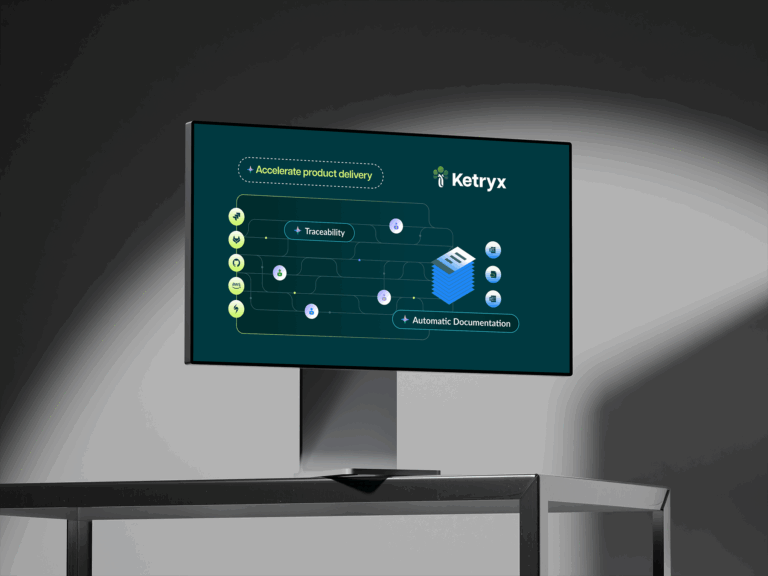
See the work behind the numbers.
The results don’t happen without great design. Take a look at the visuals we created for Ketryx during this project.